
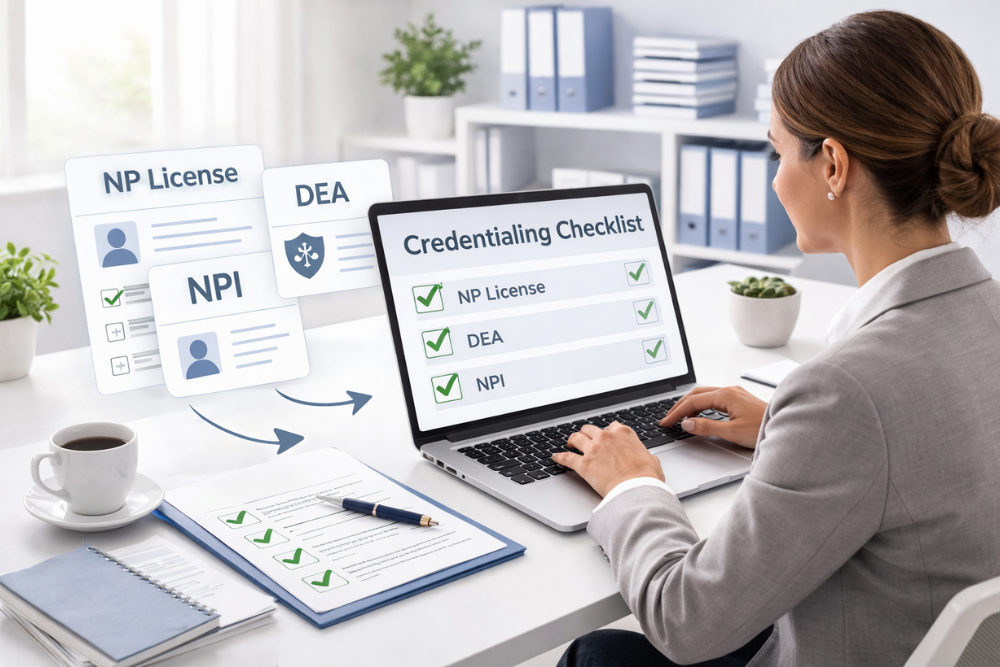
Hiring a new nurse practitioner is a major step toward expanding patient access and increasing revenue. However, delays in onboarding often stem from one overlooked factor—the NP credentialing process checklist. For practice managers, healthcare providers, and clinic owners, missing even a small step in credentialing can lead to claim denials, delayed reimbursements, and operational disruption.
A structured NP credentialing process checklist ensures your new provider moves quickly from hiring to billing, protecting both your revenue cycle and patient care continuity.
Why Credentialing Delays Hurt Your Practice
Credentialing is not just a compliance requirement—it directly impacts your ability to generate revenue. When an NP is not fully credentialed:
- Insurance claims cannot be submitted
- Reimbursements are delayed or denied
- Scheduling gaps increase
- Staff workload rises due to rework
- Revenue cycle management becomes unstable
For example, if a newly hired NP starts seeing patients without completed licensure or payer enrollment, those visits may not be billable. As a result, practices can lose thousands in potential revenue within weeks.
The Most Common Credentialing Breakdown
A typical issue occurs when an application remains “pending” due to:
- Missing signatures
- Incomplete documentation
- Expired certifications
- Incorrect or outdated provider information
Although these errors seem minor, they often trigger processing delays of 2–4 weeks or longer. Consequently, onboarding timelines extend, patient schedules are disrupted, and billing workflows are delayed.
Step-by-Step NP Credentialing Process Checklist
Step 1: Create a Master Credentialing Checklist
Start by building a comprehensive checklist that includes requirements from:
- State Board of Nursing
- DEA registration
- National certification bodies
- Payer enrollment requirements
Include all required documents such as:
- Transcripts and certifications
- State license
- DEA certificate
- NPI confirmation
- Work history and CV
This checklist becomes your central control system for tracking progress.
Step 2: Establish a Clear Timeline
Next, create a structured timeline for each credentialing milestone.
Use a shared calendar or project management tool to track:
- Application submission dates
- Expiration deadlines
- Follow-up checkpoints
Setting reminders ensures nothing slips through the cracks and keeps onboarding aligned with your revenue cycle goals.
Step 3: Organize Documents Securely
Maintain a centralized digital folder for all provider documents.
Best practices include:
- Clear file naming conventions
- Secure, HIPAA-compliant storage
- Backup copies when necessary
Organized documentation reduces processing delays and supports faster payer approvals.
Step 4: Verify Requirements and Data Accuracy
Credentialing requirements can change frequently. Therefore, always verify:
- State licensing rules
- Payer policies
- NPI and demographic data
Cross-check all information against official sources such as NPPES and licensing boards. Accurate data prevents claim denials and enrollment rejections later in the billing process.
Step 5: Conduct a Peer Review Before Submission
Before submitting applications, have another team member review the entire packet.
A second review can catch:
- Missing fields
- Incorrect numbers
- Incomplete forms
This step significantly reduces errors that lead to delays in insurance claims processing.
Step 6: Monitor and Follow Up Proactively
After submission, actively track the application status.
Best practices include:
- Following up with licensing boards
- Responding quickly to information requests
- Monitoring approval timelines
Proactive follow-up ensures faster credentialing and prevents unnecessary delays in reimbursement workflows.
Real-World Impact: Why This Matters
Consider a clinic that hires a new NP but delays credentialing due to incomplete documentation. The provider begins seeing patients, but claims are rejected because payer enrollment is still pending.
Outcome:
- Claims denied or held
- Revenue delayed for 60+ days
- Increased administrative workload
- Patient scheduling disruptions
By using a structured checklist, these issues can be avoided entirely.
Build a Reliable Credentialing System
A well-managed NP credentialing process checklist is essential for reducing delays, improving coding accuracy, and maintaining a strong revenue cycle. When practices take a proactive approach, they minimize claim denials, accelerate reimbursements, and ensure providers are ready to deliver care without disruption.
In healthcare, efficient credentialing is not just operational—it’s financial protection.