
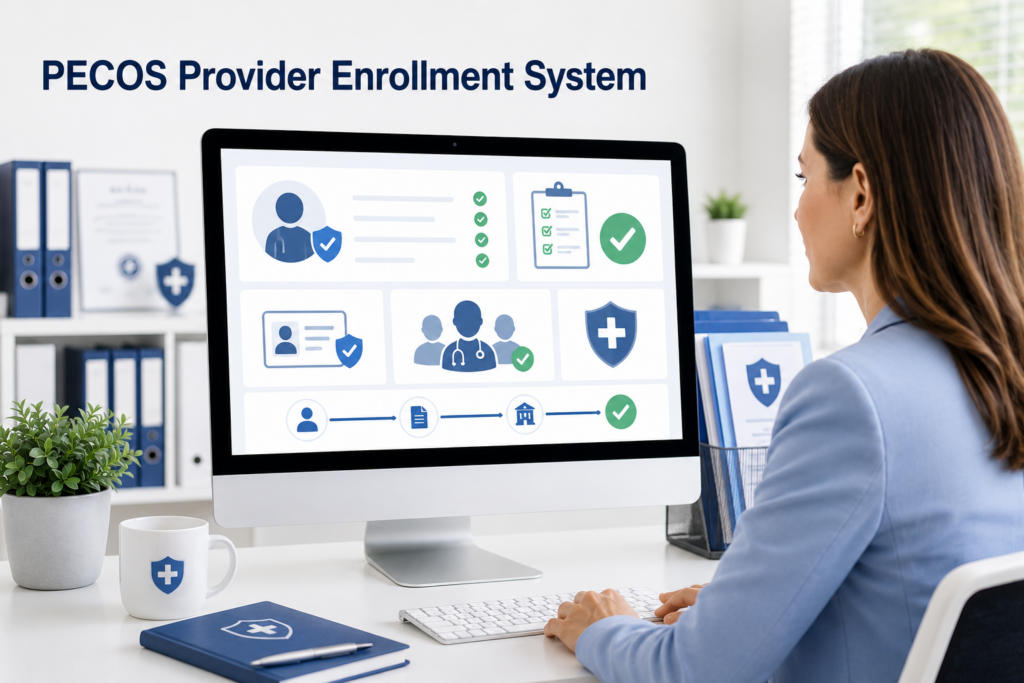
Managing Medicare enrollment is one of the most important administrative responsibilities for healthcare practices. The PECOS Provider Enrollment System plays a central role in helping providers enroll, revalidate, and maintain Medicare participation without unnecessary delays. For practice managers, clinic owners, and medical billing teams, understanding how PECOS works is essential for protecting reimbursement timelines and maintaining compliance.
Many practices still underestimate how enrollment errors can affect revenue cycle performance. A single mistake in provider enrollment data can delay claim approvals, trigger payer rejections, or prevent providers from billing Medicare entirely. These disruptions often create financial strain, especially for growing practices onboarding new providers.
The shift from paper-based enrollment to digital enrollment through PECOS has significantly improved efficiency across the healthcare industry. However, practices that fail to understand the system properly still face operational setbacks and compliance risks.
What Is the PECOS Provider Enrollment System?
The Provider Enrollment, Chain, and Ownership System (PECOS) is the official CMS online platform used to manage Medicare enrollment and provider information. It allows healthcare organizations to complete enrollment-related activities electronically instead of relying on slower paper submissions.
Healthcare providers commonly use PECOS to:
- Enroll new providers into Medicare
- Revalidate existing Medicare enrollment
- Update ownership or practice information
- Manage reassignment relationships
- Track application status in real time
Because PECOS connects directly with CMS enrollment workflows, accurate information becomes critical for successful approval and reimbursement.
The Most Common Enrollment Problems Practices Face
Many Medicare enrollment delays occur because practices overlook small administrative details during submission. While the errors may seem minor initially, they can create major billing disruptions later.
The most common PECOS-related issues include:
- Mismatched Provider Information: Differences between NPPES records and PECOS data frequently trigger application delays. Even small discrepancies involving provider names, addresses, or Legal Business Names can create problems.
- Missing Supporting Documents: Expired licenses, incomplete IRS documentation, or missing EFT forms often delay enrollment processing for weeks.
- Delayed Revalidation: Providers who miss Medicare revalidation deadlines risk temporary deactivation, claim denials, and reimbursement interruptions.
- Incorrect Ownership or Reassignment Data: Ownership structure errors can trigger compliance concerns and force CMS to request additional clarification before approval.
- Failure to Respond to Development Requests: CMS or Medicare Administrative Contractors (MACs) may request additional documentation during review. Delayed responses can significantly extend enrollment timelines.
How Enrollment Delays Affect Revenue Cycle Performance
PECOS issues directly impact financial operations within healthcare practices.
When provider enrollment is delayed:
- Medicare claims cannot process correctly
- Reimbursements are postponed
- Accounts receivable continue aging
- Providers may become temporarily non-billable
- Administrative staff spend additional time correcting enrollment errors
For multi-provider practices, even one delayed enrollment can create scheduling disruptions and revenue loss across the organization.
Imagine hiring a new physician expected to begin seeing Medicare patients next month. If PECOS enrollment remains incomplete by the provider’s start date, claims submitted under that physician may reject automatically. The practice then faces delayed revenue while billing teams work through enrollment corrections.
5 Important Steps for a Smoother PECOS Workflow
Practices that manage PECOS successfully usually follow structured internal workflows designed to prevent avoidable delays.
1. Verify NPPES and PECOS Data Together
Provider information should always match exactly across both systems. This includes:
- Legal Business Name
- Provider credentials
- Practice address
- Taxonomy information
Even minor inconsistencies can trigger CMS review delays.
2. Organize Enrollment Documents Before Submission
Before starting the application, gather all required documents, including:
- State licenses
- IRS verification letters
- EFT forms
- Ownership documentation
- Certifications
Complete documentation significantly improves approval speed.
3. Monitor Revalidation Deadlines Proactively
Many practices run into billing interruptions simply because revalidation deadlines were overlooked. Setting internal reminders helps prevent deactivation and reimbursement disruption.
4. Respond Quickly to CMS Requests
If CMS requests clarification or additional documents, fast responses are critical. Delays in communication often extend processing timelines unnecessarily.
5. Use Real-Time Application Tracking
One of PECOS’ biggest advantages is visibility. Tracking applications regularly allows practices to identify problems early before they affect billing operations.
Why PECOS Improves Administrative Efficiency
Compared to paper enrollment, the PECOS Provider Enrollment System offers several operational advantages:
- Faster application processing
- Reduced paperwork and manual entry
- Improved enrollment tracking
- Better data security
- Easier provider maintenance and updates
For healthcare organizations managing multiple providers, these efficiencies can significantly reduce administrative burden and improve revenue cycle performance.
Conclusion
The PECOS Provider Enrollment System has become an essential tool for healthcare practices managing Medicare enrollment and compliance. When used correctly, it helps reduce enrollment delays, improve billing readiness, and streamline provider management workflows.
Practices that invest in accurate enrollment processes, proactive monitoring, and organized documentation are far more likely to avoid claim denials, reimbursement delays, and operational disruption. In today’s healthcare environment, strong enrollment management is no longer optional — it is a critical part of maintaining financial stability and long-term practice growth.